CELPIP Speaking Task 3: Describing a Scene
Describe a busy picture to someone who can’t see it, in 60 seconds. Practise below, then compare with level 7, 9 and 10 descriptions.
Task 3 · Describing a Scene
Saturday farmers market
Describe some things that are happening in the picture below as well as you can. The person with whom you are speaking cannot see the picture.

Quick tips for this task
- Start with the big picture, then move area by area.
- Use location language: in the foreground, on the left, behind.
- Describe actions with the present continuous.
Ready
- Prep
- 0:30
- Speak
- 1:00
Your browser will ask for the microphone. Recordings are scored, then discarded — never stored.
In CELPIP Speaking Task 3 (Describing a Scene), you see a picture with several things happening and get 30 seconds to prepare and 60 seconds to describe it to someone who can’t see it. Strong answers give the big picture first, move area by area with location language and describe actions in the present continuous.
How long do you get for CELPIP Speaking Task 3?
30 seconds to study the picture and 60 seconds to describe it. Use the preparation time to choose a route through the picture — for example left to right, or foreground to background — and the three or four details you will mention. The same picture returns in Task 4.
- 0:30Prep
- 1:00Speak
How should you structure a Task 3 description?
One-sentence overview (about 8 s)
Where is it and what is the general situation? “This is a busy rail yard in a city on a snowy winter morning.”
Sweep the picture in one direction (about 40 s)
Pick a route and keep to it: in the foreground, on the left, in the middle, behind that, in the far background. Three or four areas is plenty.
People and actions in the present continuous
“Two people are walking along the road”, “smoke is rising from the engine”. Add one detail of colour, size or mood for each.
Close with the overall feeling (about 8 s)
Cold, busy, peaceful, tense — one sentence that helps the listener picture it.
About our practice pictures
Until our own practice photos are ready, Task 3 and Task 4 use public-domain Canadian paintings with visible activity. The skill is the same: a clear route through the scene, precise location words and actions.
Task 3 practice scenes
Each scene is used again for a prediction in Task 4. All prompts are original practice material, not real or recalled test questions.
Prompt 1
Saturday farmers market
Describe some things that are happening in the picture below as well as you can. The person with whom you are speaking cannot see the picture.
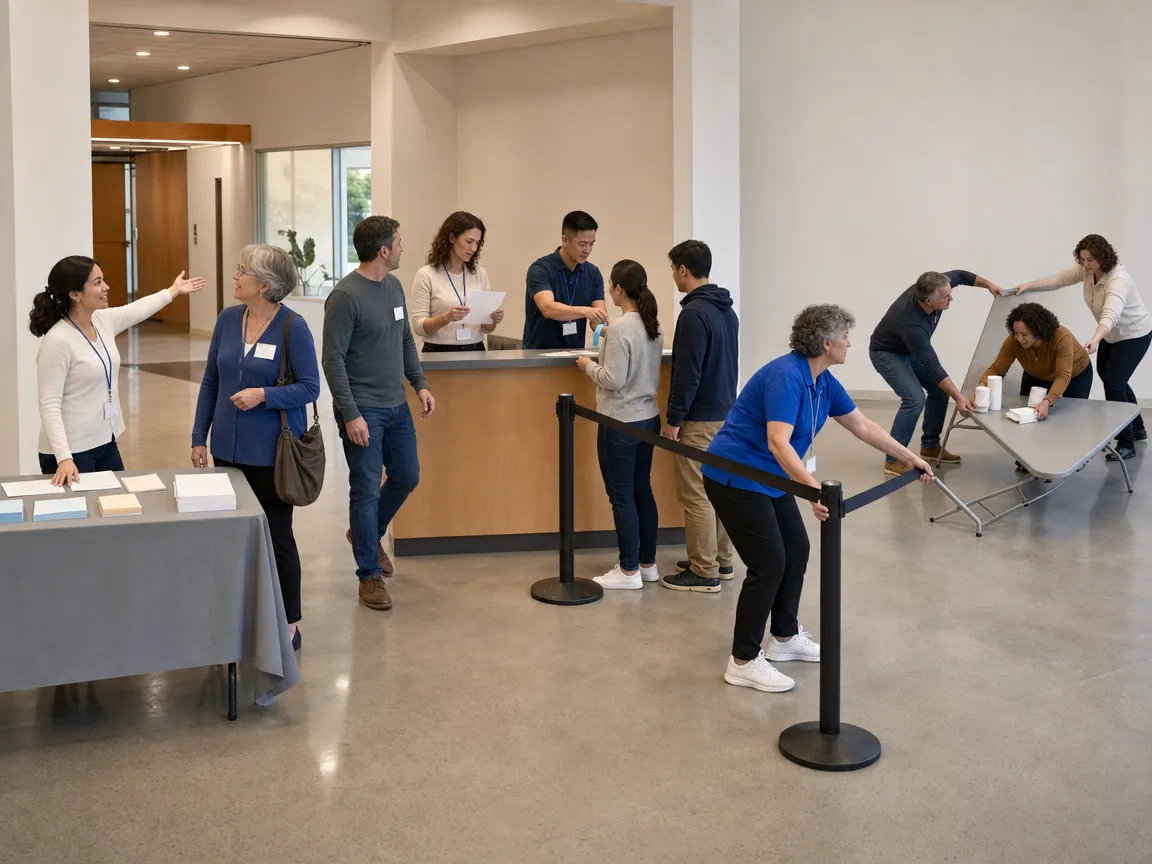
Prompt 2
Community centre on a weekday
Describe some things that are happening in the picture below as well as you can. The person with whom you are speaking cannot see the picture.

Prompt 3
Busy transit station
Describe some things that are happening in the picture below as well as you can. The person with whom you are speaking cannot see the picture.
Prompt 4
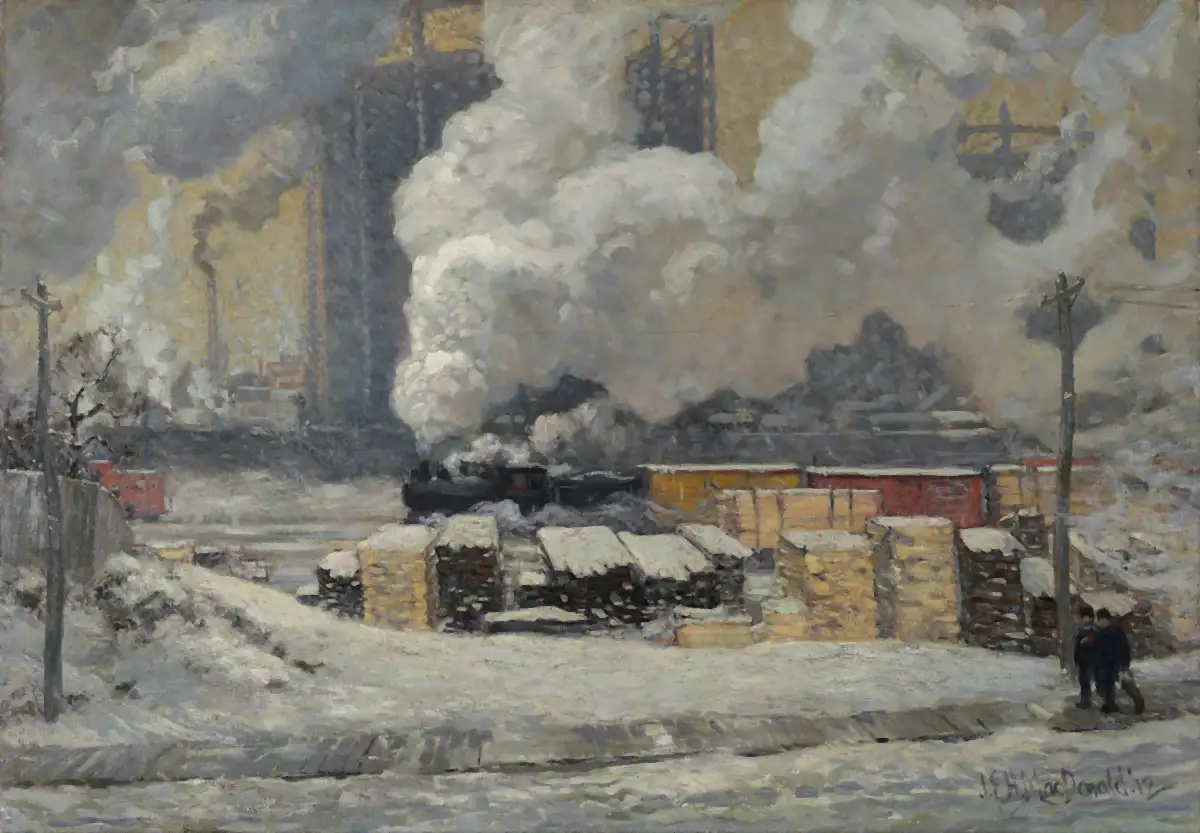
A rail yard on a winter morning
Describe some things that are happening in the picture below as well as you can. The person with whom you are speaking cannot see the picture.
Prompt 5
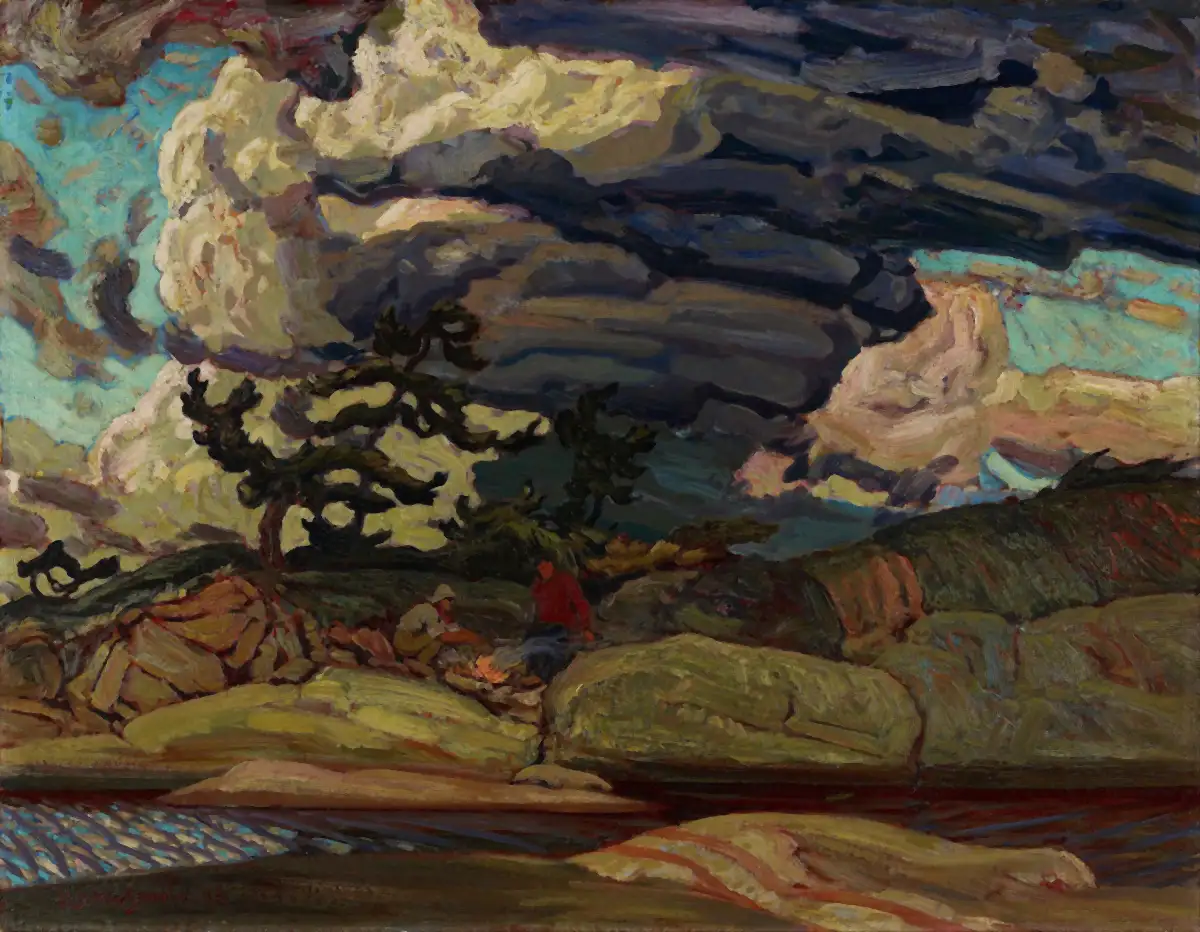
Campers on the rocks before a storm
Describe some things that are happening in the picture below as well as you can. The person with whom you are speaking cannot see the picture.
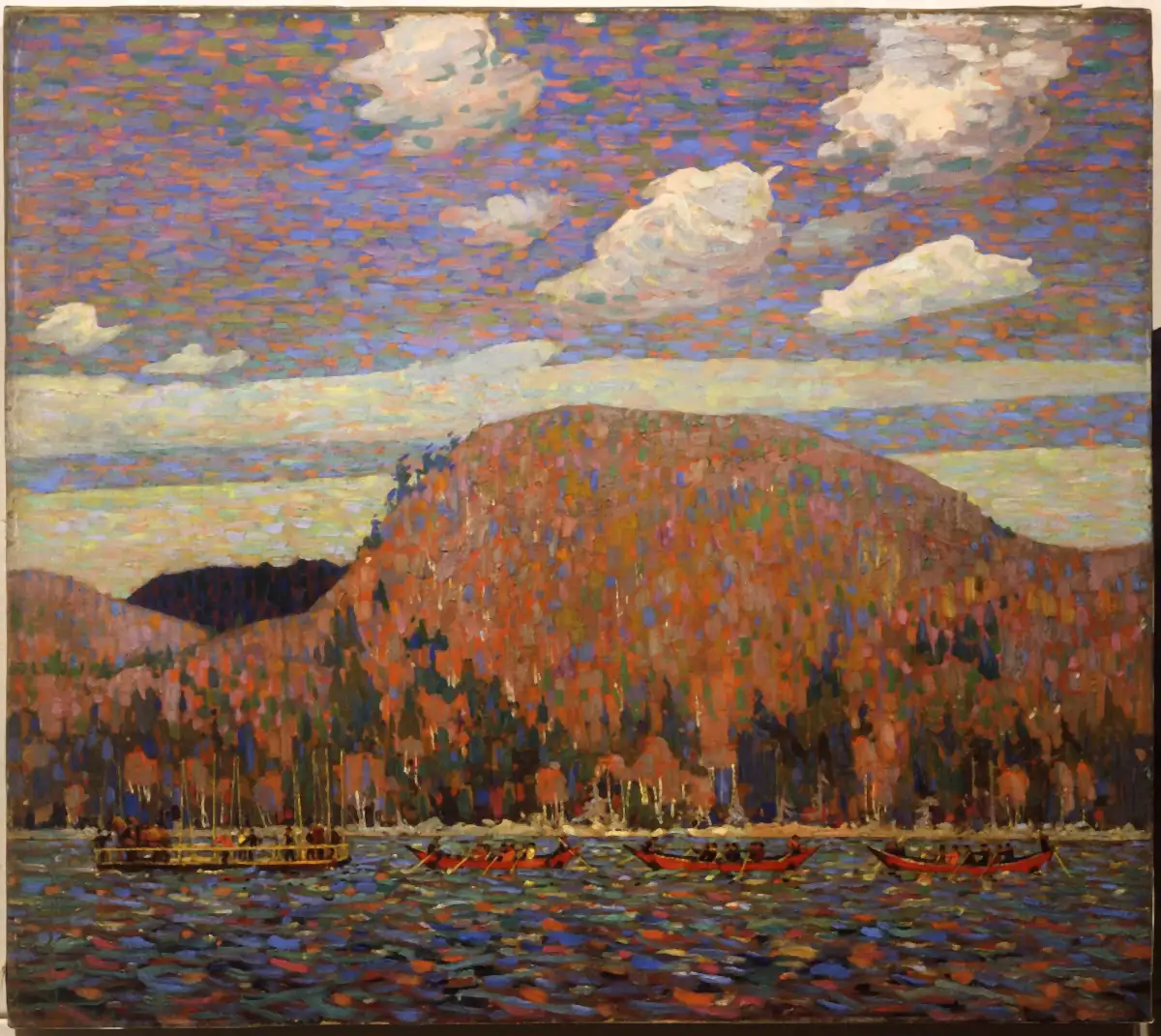
Prompt 6
Boats crossing a lake in autumn
Describe some things that are happening in the picture below as well as you can. The person with whom you are speaking cannot see the picture.
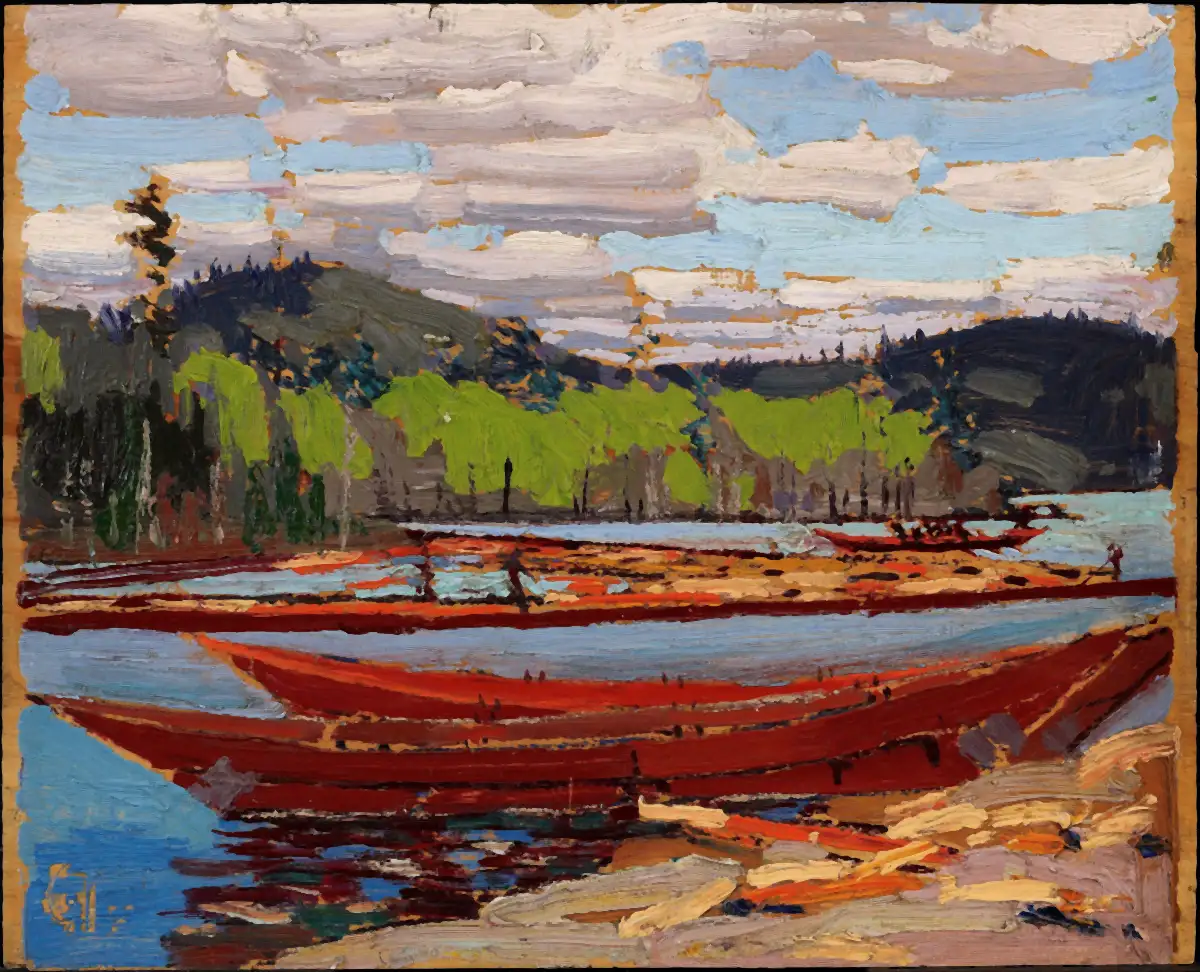
Prompt 7
Boats pulled up on the shore
Describe some things that are happening in the picture below as well as you can. The person with whom you are speaking cannot see the picture.
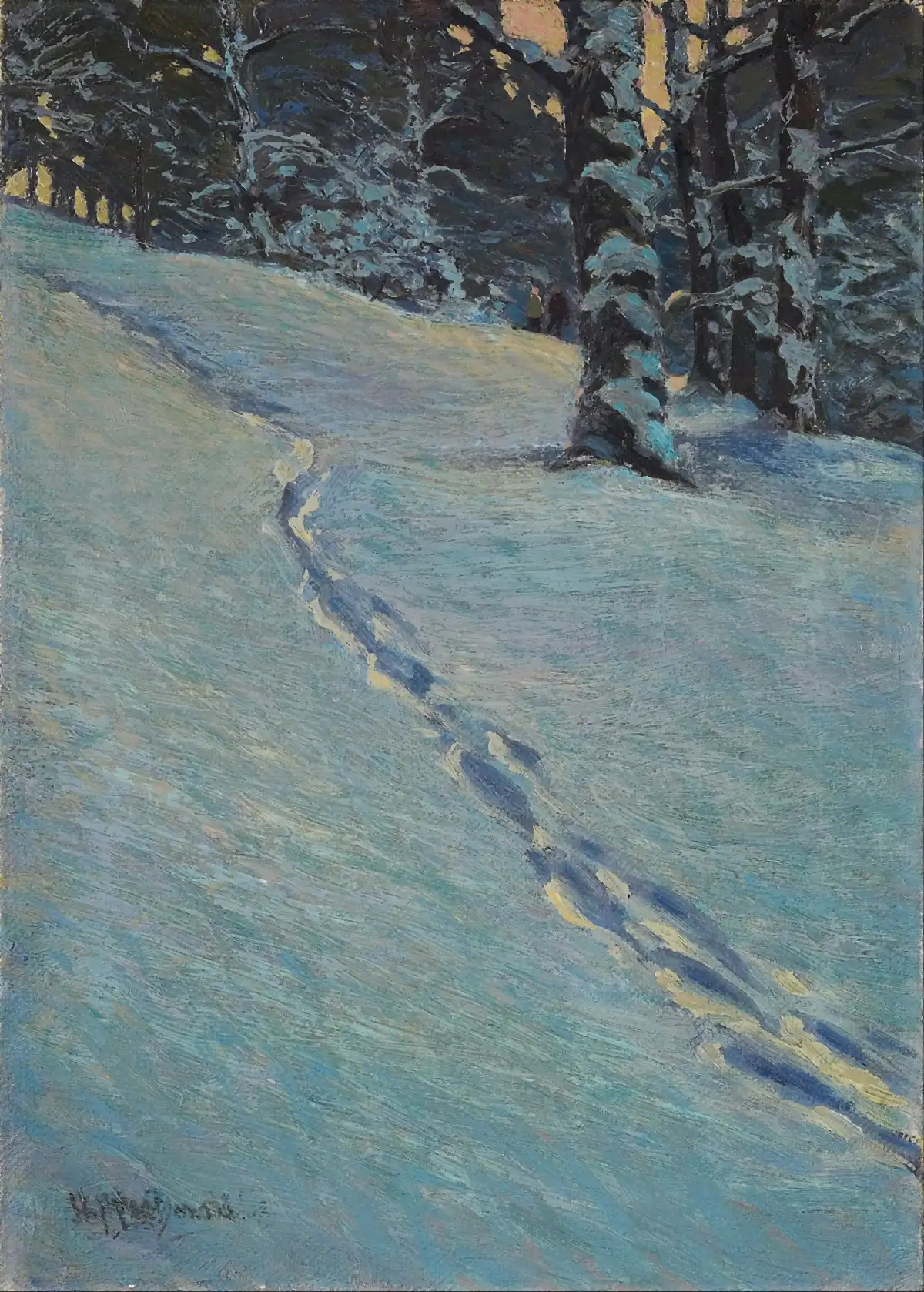
Prompt 8
A snowy path through the park
Describe some things that are happening in the picture below as well as you can. The person with whom you are speaking cannot see the picture.


What do level 7, 9 and 10 descriptions of the same scene sound like?
Three original descriptions of Scene 1 (Tracks and Traffic, a rail yard in winter). Levels are editorial estimates for teaching, not official scores.
In this picture there is a train station in winter. There is a lot of snow. In the middle there is a black train and it has many cars, red and yellow. The train makes a lot of white smoke. In front of the train there is a lot of wood, maybe for building, and it has snow on top. On the right side there are two people and they are walking. Behind the train there are big buildings. I think it is a cold day and the city is busy.
Covers the main parts and the listener can follow, but “there is” repeats, the route jumps around and details are general.
This picture shows a rail yard in a city on a snowy winter morning. In the middle of the scene, a black steam engine is pulling a line of red and yellow freight cars from left to right, and huge clouds of white smoke are rising above it. In the foreground, there are several stacks of lumber, each one covered with a thick layer of snow. On the right, two people in dark coats are walking along the road beside a wooden telephone pole. Behind the train, you can just see tall industrial buildings through the smoke. Overall, it feels cold and quiet, but also very busy.
Clear overview, a consistent route (middle → foreground → right → background) and precise nouns (freight cars, lumber, telephone pole).
What I’m looking at is a winter scene in a city rail yard — it looks like early morning, and everything is covered in snow. Running across the middle of the picture is a black steam locomotive hauling a string of red and mustard-yellow freight cars, and it’s sending up an enormous column of white smoke that almost hides the buildings behind it. Closer to us, in the foreground, rows of lumber are stacked in neat piles, each with a cap of snow on top. Over on the right-hand side, two figures in long dark coats are making their way along the road, past a leaning telephone pole. In the distance, you can make out the outline of tall warehouses or grain elevators. The colours are mostly grey and white, so the whole scene feels cold and heavy, even though there’s a lot going on.
Fluent signposting (“running across the middle”, “closer to us”), vivid but accurate vocabulary and a confident overall impression.
Common mistakes in Task 3
- No overview. Jumping straight to a detail leaves the listener lost. Start with where and what.
- Random order. Moving left, then background, then left again is hard to follow. Choose one route.
- “There is… there is… there is…” Vary with you can see, next to, is standing, is being.
- Guessing the story too early. Predictions belong to Task 4. In Task 3, describe what you see.
- Listing objects without actions. Raters want to hear what people are doing.
What does the AI feedback check in Task 3?
The report estimates a level range on the four CELPIP criteria and quotes your words as evidence. For Task 3 it checks for an overview, a clear route through the picture, location language and actions in the present continuous, and it shows your pace, long pauses and fillers on a timed transcript.
It is a practice estimate, not an official CELPIP score — see how we calibrate. Next, predict what happens in the same scene in Task 4.
Questions people ask
Do I need to describe everything in the picture?
Which tense should I use in Task 3?
Is the Task 3 picture used again?
Next stations

Unofficial practice and estimates — not affiliated with Paragon or IRCC, and not legal advice. Read the disclaimer